In His Hands Ministries · Archaeological Study

Scripture & the Spade

Every major dig in the biblical world has confirmed the Word of God

"The entirety of Your word is truth, and every one of Your righteous judgments endures forever." Psalm 119:160
0 Biblical sites confirmed
0 Biblical figures verified
25 NT manuscripts preserved
0 Finds that disprove Scripture
Part One

Old Testament

From the patriarchs of Genesis to the prophets of the exile, archaeology has placed biblical figures and events in real history — often using the enemies of Israel as unintentional witnesses to Scripture's accuracy.

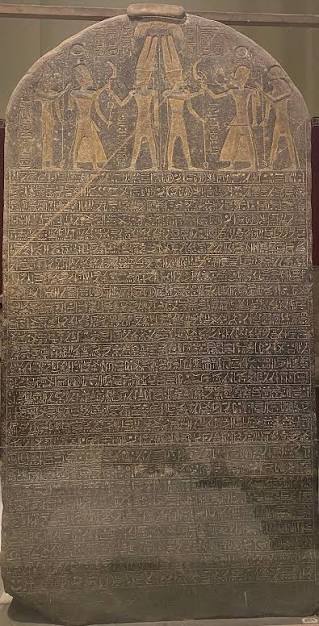
The Merneptah Stele showing the earliest extrabiblical reference to Israel
The Merneptah Stele, c. 1208 BC — Egyptian Museum, Cairo
Old Testament Confirmed c. 1208 BC · Egypt

The Merneptah Stele

Pharaoh Merneptah's victory inscription contains the line: "Israel is laid waste; his seed is no more." This is the oldest known mention of Israel outside the Bible — placing them in Canaan precisely when Scripture says they were there. Scholars who argued Israel was a late literary invention were permanently silenced by this single granite slab.

"Now these are the names of the children of Israel who came to Egypt..." Exodus 1:1

Discovered: Thebes, Egypt (1896) · Egyptian Museum, Cairo
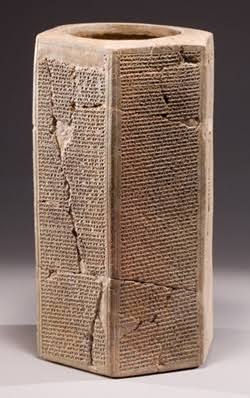
The Taylor Prism containing Sennacherib's annals
The Taylor Prism (Sennacherib's Annals), c. 701 BC — British Museum, London
Old Testament Confirmed c. 701 BC · Assyria

Sennacherib's Annals

The Assyrian king boasts of besieging 46 Judean cities and trapping Hezekiah in Jerusalem "like a bird in a cage" — yet conspicuously admits he could not take the capital. This perfectly matches 2 Kings 18–19: the siege happened, but God delivered the city. An enemy king's own record confirms both the attack and its supernatural outcome.

"And it came to pass on a certain night that the angel of the LORD went out and killed 185,000 in the Assyrian camp..." 2 Kings 19:35

Discovered: Nineveh (1830) · British Museum, London

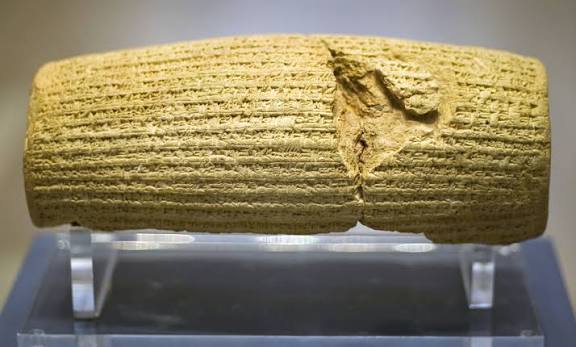
The Cyrus Cylinder at the British Museum
The Cyrus Cylinder, c. 539 BC — British Museum, London
Old Testament Prophetic Fulfillment c. 539 BC · Persia

The Cyrus Cylinder

Isaiah named Cyrus as God's instrument of deliverance over 150 years before his birth. This baked clay cylinder records Cyrus the Great's policy of freeing captive peoples and restoring their sanctuaries — exactly what the Bible records him doing for the Jewish exiles. The cylinder is now on UNESCO's Memory of the World Register as a foundational human rights document.

"Thus says Cyrus king of Persia: All the kingdoms of the earth the LORD God of heaven has given me..." Ezra 1:2

Discovered: Babylon (1879) · British Museum, London

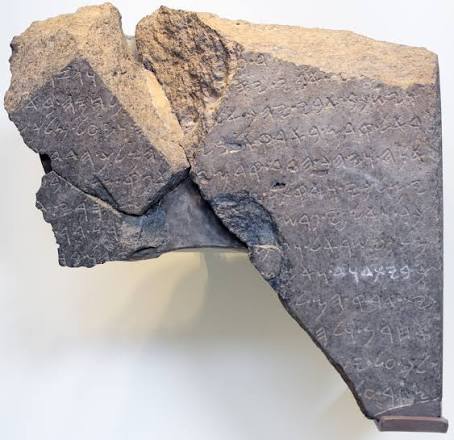
Tel Dan Stele mentioning the House of David
Tel Dan Stele, c. 841 BC — Israel Museum, Jerusalem
Old Testament Confirmed c. 841 BC · Aramean

Tel Dan Stele — "House of David"

An Aramean king's victory boast contains the Aramaic phrase bytdwd — "House of David." Discovered in 1993 in northern Israel, this was the first extrabiblical mention of King David's dynasty by name. Before this find, prominent scholars called David a legend. The stele ended that argument permanently. Israel's neighboring enemies knew David was real.

"Your house and your kingdom shall be established forever before you. Your throne shall be established forever." 2 Samuel 7:16

Discovered: Tel Dan, Israel (1993) · Israel Museum, Jerusalem

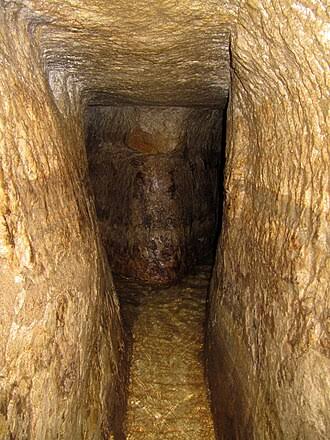
Siloam Tunnel inscription carved by Hezekiah's workers
Siloam Tunnel Inscription, c. 701 BC — Istanbul Archaeological Museum
Old Testament Confirmed c. 701 BC · Jerusalem

Hezekiah's Tunnel & Siloam Inscription

A 1,750-foot tunnel carved through solid bedrock beneath Jerusalem, still walkable today. An inscription found inside describes the moment the two digging crews broke through and heard each other's voices. The tunnel secured Jerusalem's water supply before Sennacherib's siege — matching 2 Kings 20:20 with engineering precision. It remains one of the greatest surviving wonders of the ancient biblical world.

"...how he made a pool and a tunnel and brought water into the city..." 2 Kings 20:20

Discovered: City of David, Jerusalem (1880) · Open to visitors today

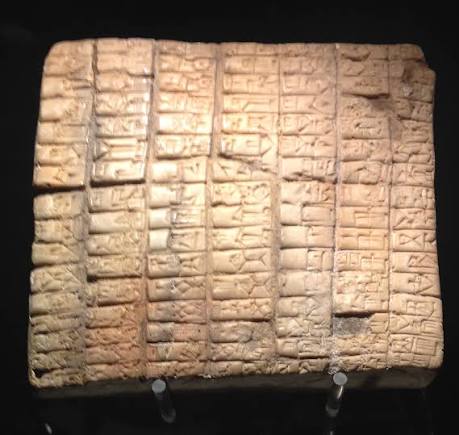
Tell Mardikh excavation site — ancient Ebla, Syria, where 17,000 tablets were discovered
Tell Mardikh (ancient Ebla), Syria — site of the 17,000-tablet discovery, 1974–75
Old Testament Major Discovery c. 2400 BC · Syria

The Ebla Tablets

Over 17,000 clay tablets discovered at ancient Ebla (Tell Mardikh, Syria) confirm the Cities of the Plain — Sodom, Gomorrah, Admah, Zeboiim, and Zoar — as real trading centers. The tablets list them in the same order as Genesis 14:2. They also confirm personal names, customs, and legal practices described in the patriarchal narratives of Abraham, Isaac, and Jacob as historically authentic to the period.

"...that these made war with Bera king of Sodom, Birsha king of Gomorrah, Shinab king of Admah, Shemeber king of Zeboiim, and the king of Bela..." Genesis 14:2

Discovered: Tell Mardikh, Syria (1974–1975)

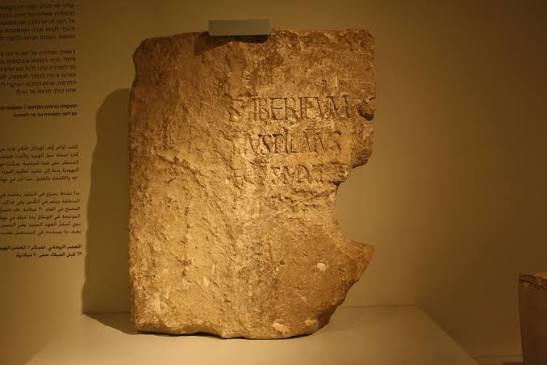
The Pilate Stone inscription found at Caesarea Maritima
The Pilate Stone, c. AD 26–36 — Israel Museum, Jerusalem
New Testament Confirmed c. AD 26–36 · Caesarea

The Pilate Stone

Skeptics long claimed Pontius Pilate was a literary invention. In 1961 a limestone block excavated at Caesarea Maritima bore the inscription: PONTIUS PILATUS PRAEFECTUS IUDAEAE. The title "Prefect" also corrects earlier scholars who called him "Procurator" — demonstrating that the Gospels' narrative details are historically precise, not invented.

"Pilate then went out to them and said, 'What accusation do you bring against this Man?'" John 18:29

Discovered: Caesarea Maritima, Israel (1961) · Israel Museum, Jerusalem

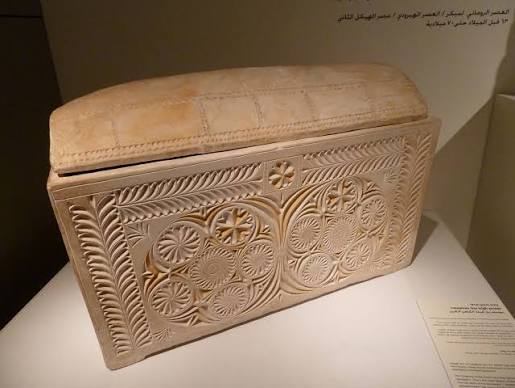
The ornate Caiaphas ossuary discovered in Jerusalem
The Caiaphas Ossuary, c. AD 18–36 — Israel Museum, Jerusalem
New Testament Confirmed c. AD 18–36 · Jerusalem

The Caiaphas Ossuary

An ornate limestone bone box discovered in Jerusalem's Peace Forest bears the inscription "Joseph son of Caiaphas" — the full name of the High Priest who presided over Jesus's trial and demanded His execution. Josephus independently records this figure. The ossuary contained the bones of a man approximately 60 years old, consistent with Caiaphas's known lifespan.

"And those who had laid hold of Jesus led Him away to Caiaphas the high priest, where the scribes and the elders were assembled." Matthew 26:57

Discovered: Jerusalem (1990) · Israel Museum, Jerusalem

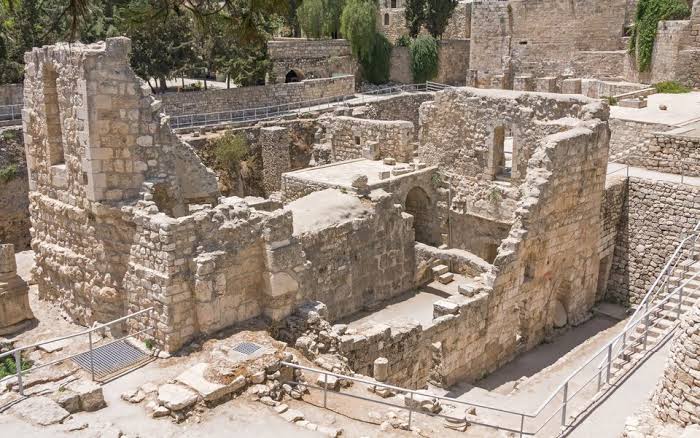
Excavated ruins of the Pool of Bethesda near St. Anne's Church, Jerusalem
Pool of Bethesda excavations, Jerusalem — five porticoes confirmed exactly as John 5:2 describes
New Testament Confirmed 1st century AD · Jerusalem

Pool of Bethesda — Five Porticoes

John 5 describes a Jerusalem pool near the Sheep Gate with "five porticoes." Critics called this architecture impossible and the account fictional — no five-sided pool was known. Excavations beneath St. Anne's Church revealed the exact site: two basins separated by a central colonnaded partition, yielding precisely five covered walkways. Every architectural detail in John's account was confirmed.

"Now there is in Jerusalem by the Sheep Gate a pool, which is called in Hebrew, Bethesda, having five porches." John 5:2

Excavated: St. Anne's Church, Jerusalem · Open to visitors today

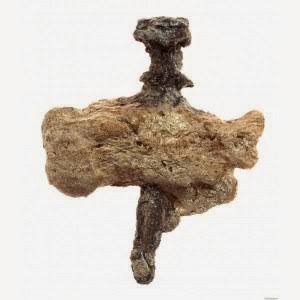
Heel bone of Yehohanan with iron nail still embedded — proof of Roman crucifixion method
Yehohanan's heel bone with iron nail still embedded, Givat HaMivtar, Jerusalem (1968)
New Testament Confirmed 1st century AD · Jerusalem

Crucified Man of Givat HaMivtar

Skeptics claimed crucifixion victims were not nailed through the heel and were denied burial. In 1968, an ossuary at Givat HaMivtar yielded the heel bone of a crucified man with an iron nail still embedded through it — proving the nail-through-heel method and confirming that victims could receive formal Jewish burial. The Passion narrative is archaeologically vindicated in both the method and the burial.

"Unless I see in His hands the print of the nails, and put my finger into the print of the nails..." John 20:25

Discovered: Givat HaMivtar, Jerusalem (1968) · Israel Antiquities Authority

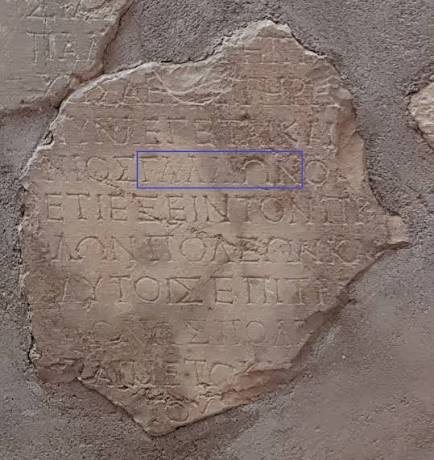
The Gallio inscription fragments from Delphi, confirming Gallio as proconsul of Achaia c. AD 51–52
Gallio Inscription fragments, Delphi Museum, Greece — dates Paul's Corinthian ministry to AD 51–52
New Testament Chronological Anchor c. AD 52 · Corinth

Gallio Inscription — Delphi

Acts 18:12 places Paul before Gallio, proconsul of Achaia, in Corinth. A fragmentary inscription at Delphi records Emperor Claudius mentioning "Gallio, my friend and proconsul of Achaia" — and precisely dates his term to AD 51–52. This has become one of the NT's most important chronological anchors, confirming Paul's Corinthian ministry timeline with precision and corroborating Acts as historical narrative.

"When Gallio was proconsul of Achaia, the Jews with one accord rose up against Paul and brought him to the judgment seat." Acts 18:12

Discovered: Delphi, Greece (1905) · Delphi Archaeological Museum

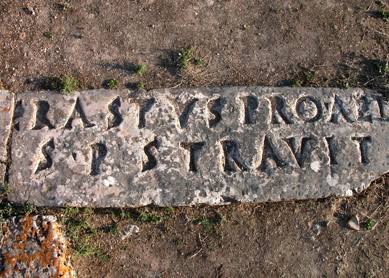
The Erastus inscription in the pavement near the theater at Corinth, Greece
Erastus pavement inscription, Corinth, Greece — still visible in situ near the ancient theater
New Testament Confirmed c. AD 50s · Corinth

The Erastus Inscription

Paul closes Romans with greetings from "Erastus, the treasurer of the city." A limestone paving block excavated near Corinth's theater reads: "Erastus, in return for the aedileship, laid this pavement at his own expense." The name, the city, and the public financial office align precisely with Romans 16:23, connecting a named New Testament individual to a specific stone still visible in Corinth today.

"Erastus, the treasurer of the city, greets you, and Quartus, a brother." Romans 16:23

Discovered: Corinth, Greece (1929) · Still in situ near the theater

Part Two

The Dead Sea Scrolls

The most significant manuscript discovery in history, found in the caves above Qumran in 1947–1956, proved that the Old Testament had been transmitted across 1,000 years of hand-copying with extraordinary fidelity.

What Was Found
Manuscripts discovered900+
OT books represented38/39
Age of Great Isaiah Scroll~2,150 yrs
Years older than previous oldest MS1,000
Textual accuracy vs. Masoretic Text95%+
Meaningful doctrinal differences0
NT Manuscript Superiority
Ancient WorkCopiesGap to original
New Testament25,000+~50–100 yrs
Homer's Iliad643~500 yrs
Caesar's Gallic Wars10~1,000 yrs
Plato's Dialogues7~1,200 yrs
Tacitus' Histories2~1,000 yrs
Aristotle's Works49~1,400 yrs

"No serious historian doubts the existence of Caesar or the writings of Plato based on manuscript count — yet the New Testament surpasses every work of ancient literature combined. The evidence for our New Testament writings is ever so much greater than the evidence for many writings of classical authors, the authenticity of which no one dreams of questioning."

— F.F. Bruce, Rylands Professor of Biblical Criticism, University of Manchester
Part Three

Discovery Timeline

Every generation of archaeology has added new confirmation. From the decipherment of Egyptian hieroglyphics to ongoing excavations in the City of David, the evidence grows deeper every decade.

1799AD
Rosetta Stone — Egypt
Unlocked Egyptian hieroglyphics, enabling scholars to read ancient records that confirm biblical pharaohs, place names, and events described in Genesis and Exodus.
Confirmed: Egyptian context of the Exodus narrative
1830AD
Sennacherib's Prism — Nineveh
Corroborates the Assyrian siege of Jerusalem under Hezekiah from the enemy's own record — while inadvertently explaining why the city was never captured.
Confirmed: Hezekiah, Jerusalem siege, 2 Kings 18–19
1868AD
Moabite Stone (Mesha Stele)
King Mesha of Moab mentions "Omri, king of Israel" and the "house of Omri" — confirming Israel's Omride dynasty and geographic territories described in 1 Kings 16.
Confirmed: Israel's Omride dynasty as historical
1879AD
Cyrus Cylinder — Babylon
Confirms Cyrus the Great's policy of freeing captive nations — directly paralleling Ezra 1 and fulfilling Isaiah's 150-year-old prophecy naming Cyrus by name.
Confirmed: Ezra 1, Isaiah 44–45 prophetic fulfillment
1896AD
Merneptah Stele — Egypt
First extrabiblical mention of "Israel" as a people in Canaan (c. 1208 BC). Permanently refuted claims that Israel was a late literary invention rather than a historical nation.
Confirmed: Israel as a historical people, c. 1208 BC
1905AD
Gallio Inscription — Delphi, Greece
Confirms Gallio as proconsul of Achaia c. AD 51–52, anchoring Paul's Corinthian timeline in Acts 18 to within a single year.
Confirmed: Acts 18:12, Pauline chronology
1947AD
Dead Sea Scrolls — Qumran Caves
900+ manuscripts including the complete Isaiah scroll — 1,000 years older than any previously known text, yet 95% identical word-for-word. Greatest biblical manuscript discovery in history.
Confirmed: OT preserved with extraordinary fidelity across 1,000 years
1961AD
Pilate Stone — Caesarea Maritima
First physical inscription naming "Pontius Pilate, Prefect of Judea" — confirmed his existence and the precise title used by the Gospel writers.
Confirmed: Pontius Pilate, correct title, John 18–19
1968AD
Crucified Man — Givat HaMivtar
Heel bone with iron nail still embedded confirmed Roman nail-through-heel crucifixion method and that victims received formal Jewish burial — directly corroborating the Passion narrative.
Confirmed: Crucifixion details, John 19–20
1974AD
Ebla Tablets — Tell Mardikh, Syria
17,000 clay tablets confirmed the Cities of the Plain (Sodom, Gomorrah, et al.) as real ancient cities — in the exact order listed in Genesis 14:2.
Confirmed: Cities of Genesis 14, patriarchal customs
1990AD
Caiaphas Ossuary — Jerusalem
"Joseph son of Caiaphas" — the bone box of the High Priest who condemned Jesus. Confirmed his historicity and full name as recorded in Matthew 26:57.
Confirmed: High Priest Caiaphas, Matthew 26–27
1993AD
Tel Dan Stele — Northern Israel
First extrabiblical mention of the "House of David" — ended the scholarly debate over whether King David was a historical figure or a literary myth.
Confirmed: King David's dynasty as historical fact
2005–Present
City of David Excavations — Jerusalem
Ongoing excavations continue to confirm the layout of biblical Jerusalem — its walls, towers, administrative buildings, and water systems — from the time of David through Nehemiah's rebuilding.
Confirmed: Jerusalem's biblical geography continues to be verified
0

Archaeological finds that have disproven the Bible

In over 150 years of systematic archaeology across the lands of the Bible — thousands of excavations, millions of artifacts — not one discovery has overturned a single biblical claim. The silence itself is evidence.

Part Four

What the Scholars Say

These are not men of faith speaking — these are secular archaeologists, historians, and textual critics whose professional work led them to the same conclusion.

"It may be stated categorically that no archaeological discovery has ever controverted a Biblical reference. Scores of archaeological findings have been made which confirm in clear outline or in exact detail historical statements in the Bible."

Nelson Glueck
Renowned Jewish archaeologist, Hebrew Union College

"The evidence for our New Testament writings is ever so much greater than the evidence for many writings of classical authors, the authenticity of which no one dreams of questioning."

F.F. Bruce
Rylands Professor of Biblical Criticism, University of Manchester

"I set out to look for truth on the borderland between history and theology. I found it there. It led me to the church."

A.N. Sherwin-White
Roman historian, Oxford University

"Luke is a historian of the first rank; not merely are his statements of fact trustworthy, he is possessed of the true historic sense... in short, this author should be placed along with the very greatest of historians."

Sir William Ramsay
Archaeologist — began his career as a skeptic of Acts

"Discovery after discovery has established the accuracy of innumerable details, and has brought increased recognition of the Bible as a source of history."

William F. Albright
Johns Hopkins University, considered the dean of biblical archaeology

"The excessive skepticism shown toward the Bible by important historical schools of the eighteenth and nineteenth centuries... has been progressively discredited. Discovery after discovery has established the accuracy of innumerable details."

Millar Burrows
Professor of Archaeology, Yale Divinity School